The Radio Planet

The canon of the air

Fifty Greatest Mysteries

Detectives, killers and the creaking door, ranked

The crime and horror canon: hard-boiled investigators, fair-play puzzles, police procedure and the anthologies that frightened a continent on a shoestring.

50 entries1931–1962Ranked by hand

Cast a ballot on any entry to move it in the listeners' order.

The head of the list

1942–1962 · Network radio

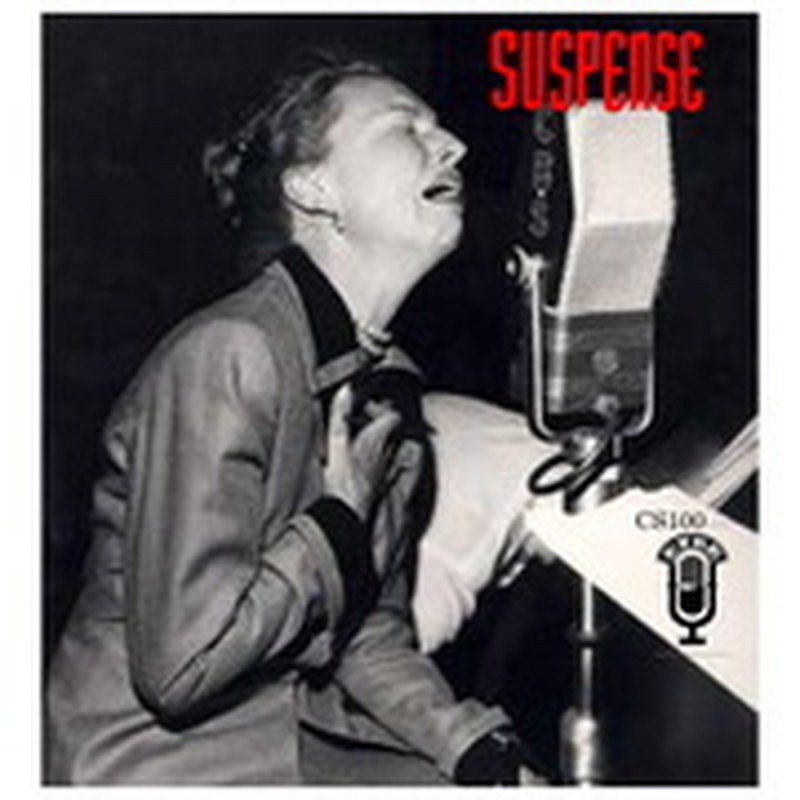
Suspense

The standard against which every other thriller series is measured: film stars playing against type, Bernard Herrmann's scores early on, and an orchestra used mainly for its silences. Twenty years and it almost never coasted.

Radio's theatre of the mind, at its most disciplined.

00 ballots
Suspense
Suspense cover
1949–1962 · Network radio

Yours Truly, Johnny Dollar

An insurance investigator who narrates his cases as an expense account, which is the wittiest structural idea in detective radio. The Bob Bailey five-part serials are the high-water mark of the whole genre.

The best-written private eye on the air, itemised.

00 ballots
Yours Truly, Johnny Dollar
Yours Truly, Johnny Dollar cover

1942–1955 · Network radio

The Whistler

A West Coast anthology of ordinary people committing well-planned crimes, narrated by a figure who knows precisely which small detail will undo them. The twist ending as a weekly contract with the listener.

The most reliable last thirty seconds in radio.

00 ballots
The Whistler
The Whistler cover

Four to 50

  1. 1937–1954 · Network radio

    The Shadow

    An invisible hero is an idea only radio can stage honestly, and the programme knows it. The laugh, the organ and the opening line are as fixed in the language as anything broadcasting produced.

    “The genre's founding myth, and still effective.”

    00 ballots
  2. 1947–1954 · Network radio

    Escape

    No permanent sponsor, a shifting slot and the same repertory players who had already done a Suspense that week — and, episode for episode, the more inventive programme. Its adaptations end where a sponsored show would have softened.
    “The most literate adventure series of the era, made on nothing.”

    00 ballots
  3. 1947–1951 · Network radio

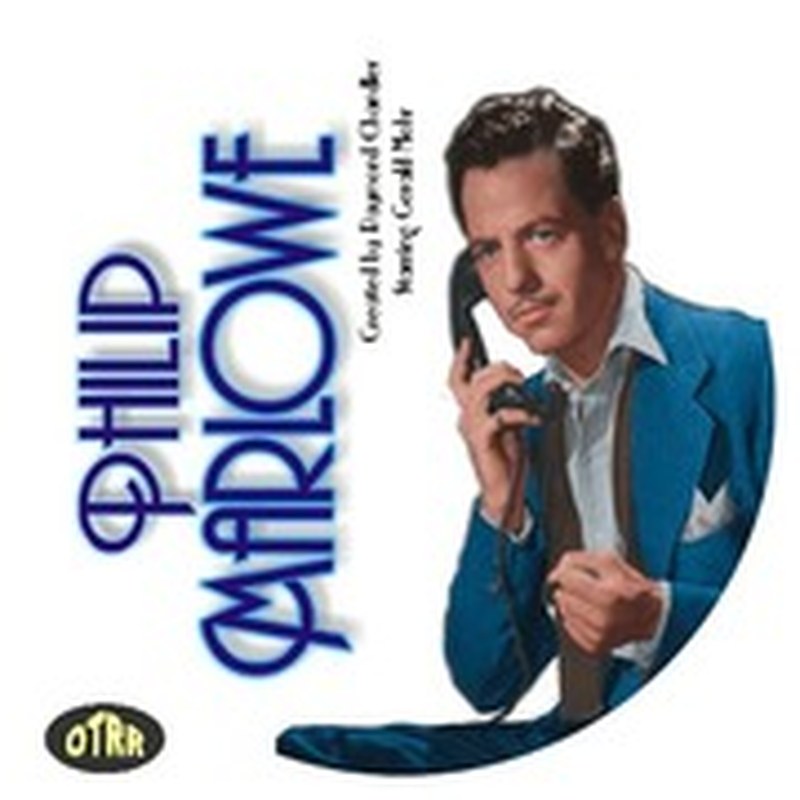
    The Adventures of Philip Marlowe

    Gerald Mohr's Marlowe is harder than Chandler's and the scripts know exactly how far the similes can be pushed before they tip over. The best-sustained hard-boiled writing radio managed.

    “Los Angeles at night, in the correct key.”

    00 ballots
  4. 1941–1952 · Network radio

    Inner Sanctum Mysteries

    The creaking door is the most famous sound effect in broadcasting, and the host's ghoulish puns are the reason the horror anthology has always been half a joke. Boris Karloff turned up regularly.

    “The door that taught horror to wink.”

    00 ballots
  5. 1943–1952 · Network radio

    The Mysterious Traveler

    A stranger on a night train telling stories that slide between crime, ghost story and science fiction. Written largely by two men, Robert Arthur and David Kogan, and remarkably consistent for a syndicated show.

    “The best anthology never carried by a major network.”

    00 ballots
  6. 1946–1951 · Network radio

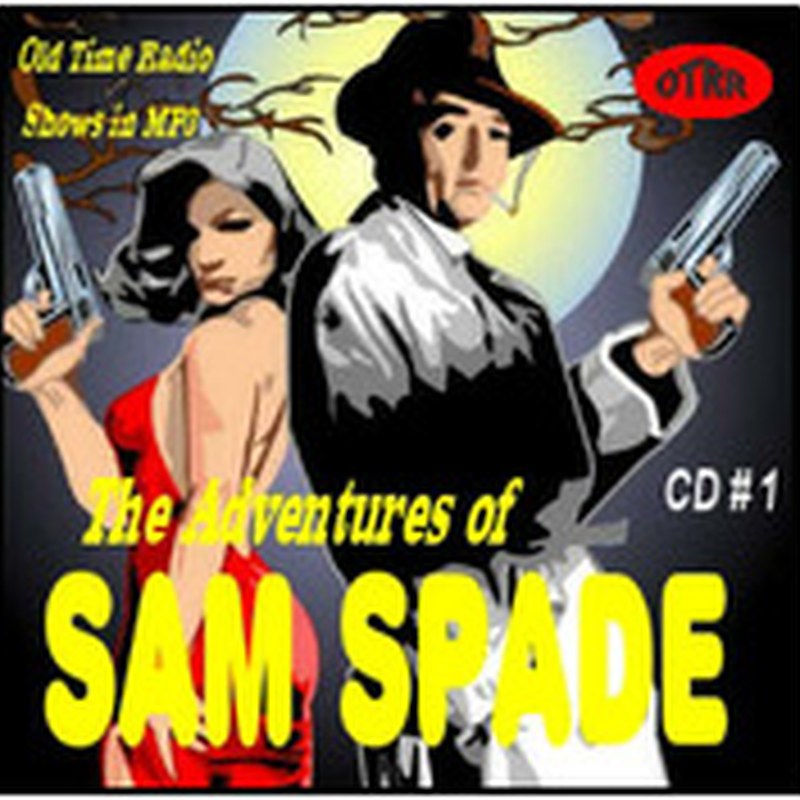
    The Adventures of Sam Spade

    Howard Duff plays Hammett's detective as a man enjoying himself, dictating each case to his secretary with the licence number as a punchline. The blacklist killed it, which tells you what the era was.
    “The funniest hard-boiled show, until politics ended it.”

    00 ballots
  7. 1953–1954 · Network radio

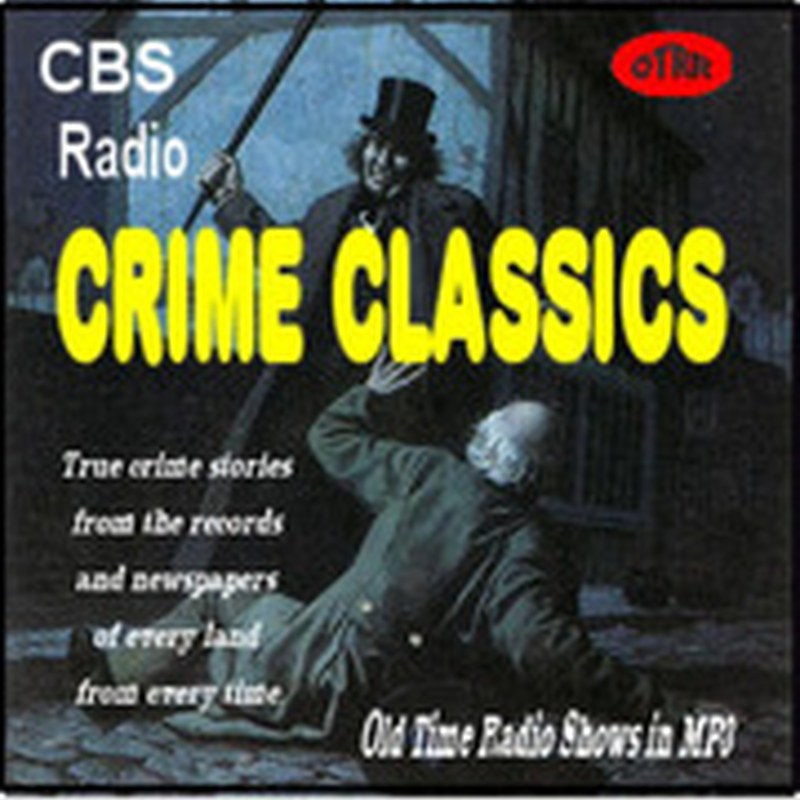
    Crime Classics

    Elliott Lewis dramatising real historical murders with scrupulous research and a dry, appalled narrator. True crime done as scholarship a lifetime before the format became an industry.

    “True crime with footnotes, and better manners.”

    00 ballots
  8. 1947–1949 · Network radio

    Quiet, Please

    Wyllis Cooper wrote for one voice speaking directly to one listener, and Ernest Chappell delivered it as though the microphone were a confidant. Frightening because it never raises its voice.

    “The strangest and most personal horror radio ever made.”

    00 ballots
  9. 1934–1947 · Network radio

    Lights Out

    Arch Oboler's late-night horror, built on sound effects graphic enough that stations warned listeners in advance. Half a century of audio horror technique was invented on this programme.

    “The show that found out how much an audience would take.”

    00 ballots
  10. 1949–1957 · Network radio

    Dragnet

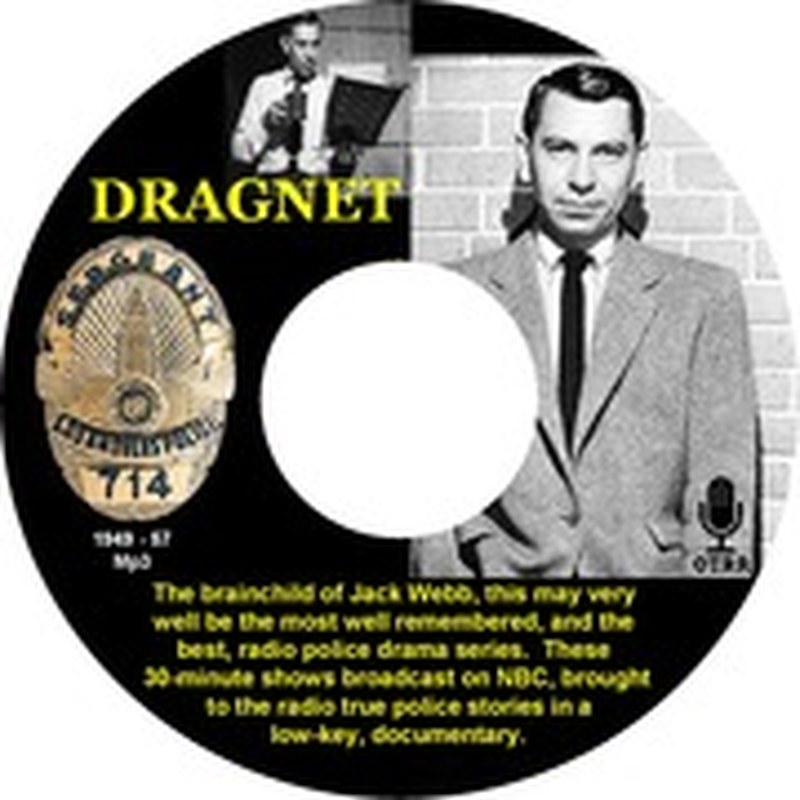
    Procedure as suspense: reports typed, doors knocked, hours wasted. The flat delivery was a deliberate rebuke to every detective show above it on this list.

    “Realism as a stylistic weapon.”

    00 ballots
  11. 1949–1954 · Network radio

    Broadway Is My Beat

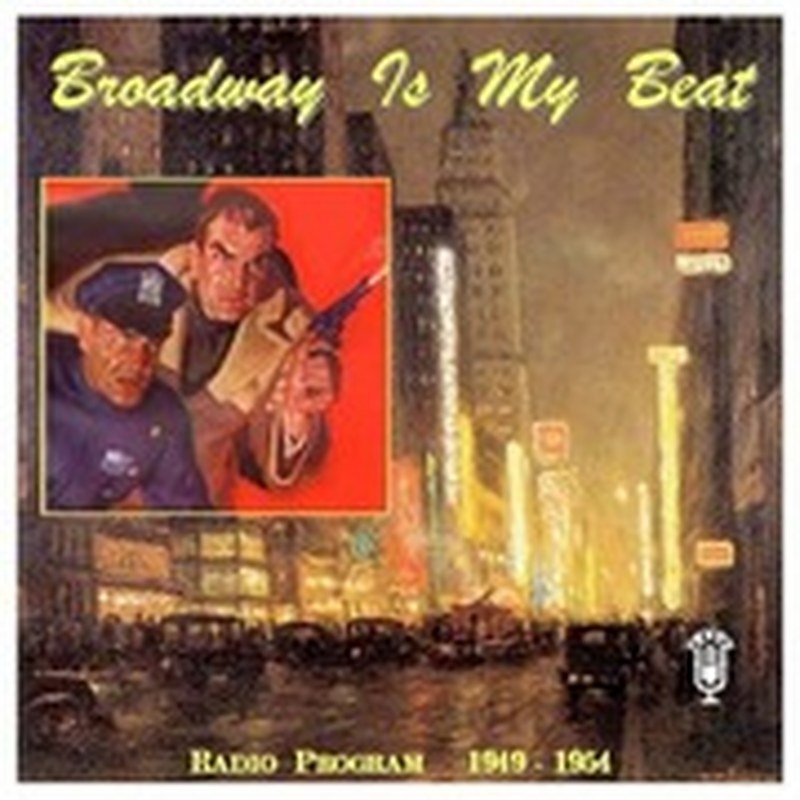
    A police procedural written like poetry, with Elliott Lewis producing and a score that treats Times Square as weather. The most stylised crime series on the air, and it earns the style.

    “The most beautiful sentences ever spoken over a corpse.”

    00 ballots
  12. 1939–1950 · Network radio

    The New Adventures of Sherlock Holmes

    Rathbone and Bruce carrying their film partnership to the microphone, with Edith Meiser's scripts ranging well beyond the canon. The sherry-and-fireside framing device is a small masterpiece of format.

    “The definitive broadcast Holmes, by some distance.”

    00 ballots
  13. 1952 · Network radio

    The Black Museum

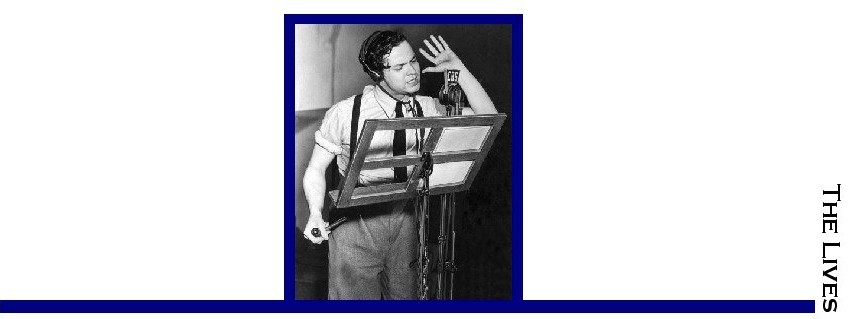
    Orson Welles walking through Scotland Yard's collection of objects from real murders, each one introducing its case. The conceit is perfect and Welles knows exactly how little to do with it.

    “Welles, an object, and a killing. Nothing else needed.”

    00 ballots
  14. 1951–1952 · Network radio

    Lives of Harry Lime

    Welles again, playing the villain of The Third Man in the years before the film's ending, with the zither and all the charm intact. A prequel series decades before anyone called it that.

    “A rogue too enjoyable to be allowed to die on schedule.”

    00 ballots
  15. 1950–1952 · Network radio

    Night Beat

    Frank Lovejoy as a Chicago night reporter, and a series far more interested in the people at the edge of the story than the crime at its centre. Melancholy, and unusually humane for the genre.

    “The crime show that mostly wanted to know how you ended up here.”

    00 ballots
  16. 1939–1952 · Network radio

    I Love a Mystery

    Carlton E. Morse's serial of three adventurers and a detective agency, capable of running a single horror story across weeks. Devotedly remembered by everyone who heard it as a child, and it holds up.

    “The most sheerly enjoyable serial radio ever ran.”

    00 ballots
  17. 1939–1948 · Network radio

    The Adventures of Ellery Queen

    The fair-play puzzle taken seriously enough to stop the programme before the solution and let a guest panel guess. Detective fiction's only genuine game show.

    “The one mystery series that let you play along, honestly.”

    00 ballots
  18. 1950–1951 · Network radio

    The New Adventures of Nero Wolfe

    Sydney Greenstreet as the immovable orchid-grower, with Archie doing the walking. The casting is so right that the books are hard to read afterwards without hearing it.

    “The perfect voice for a detective who refuses to leave the house.”

    00 ballots
  19. 1949–1953 · Network radio

    Richard Diamond, Private Detective

    Dick Powell's detective takes the beating, solves the case and then sings at the piano to close the show. Lighter than its rivals on purpose, and the scripts are sharp.

    “The only private eye who ends the episode with a song.”

    00 ballots
  20. 1946–1949 · Network radio

    Pat Novak, For Hire

    Jack Webb before Dragnet, in the most extravagantly overwritten hard-boiled dialogue ever broadcast. It is a parody and a masterclass at the same time, and knows it.

    “The hard-boiled style pushed until it laughs.”

    00 ballots
  21. 1945–1951 · Network radio

    The Saint

    Vincent Price as Simon Templar, thoroughly amused by everyone in the room. The lightest touch in crime radio, and the hardest to imitate.

    “Villainy foiled by a man who finds it all rather funny.”

    00 ballots
  22. 1943–1955 · Network radio

    Casey, Crime Photographer

    A newspaper photographer solving cases out of the Blue Note bar, with a live jazz combo playing under the scenes. The atmosphere is the point and nothing else sounds like it.

    “Crime solved between sets.”

    00 ballots
  23. 1946–1947 · Network radio

    Murder at Midnight

    Syndicated horror with a taste for the supernatural and a budget that forced real invention in the sound booth. Consistently nastier than the network shows dared to be.

    “Late-night syndication, at its most unwholesome.”

    00 ballots
  24. 1946–1948 · Network radio

    The Clock

    Time itself narrates, indifferent to everyone in the story, which gives even the slighter scripts a cold edge. A small idea, beautifully sustained.

    “The most detached narrator in the genre.”

    00 ballots
  25. 1947 · NBC

    Mystery in the Air

    Peter Lorre performing Poe, Gogol and Wilde with an intensity that occasionally seems unsafe. Eight surviving weeks of a star being allowed to go too far.

    “Peter Lorre, unsupervised.”

    The whole run
    00 ballots
    25 min transfer
  26. 1931–1938 · Network radio

    The Witch's Tale

    The first horror anthology on American radio, hosted by an old woman and her cat, and the direct ancestor of everything else in this column. Old Nancy invented the horror host.

    “Where all of this came from.”

    00 ballots
  27. 1943–1945 · Network radio

    Weird Circle

    Public-domain gothic literature adapted for syndication with a tolling bell and no stars. Cheap, and unexpectedly faithful to Poe, Stevenson and Le Fanu.

    “The nineteenth century, on a shoestring.”

    00 ballots
  28. 1942–1954 · Network radio

    Mr. and Mrs. North

    A publisher and his wife who find bodies with implausible regularity, and the best married double-act in crime radio. Domestic comedy and murder, balanced far more carefully than it sounds.

    “Marriage as a working detective agency.”

    00 ballots
  29. 1946–1954 · Network radio

    Let George Do It

    Bob Bailey's first great detective, hired by personal advertisement, honing the manner he later brought to Johnny Dollar. Underrated because the premise sounds like a joke.

    “The apprenticeship of radio's best detective voice.”

    00 ballots
  30. 1948–1949 · Network radio

    Box 13

    Alan Ladd, financing his own series, as a novelist who advertises for adventure and gets it. Brisk, funny and produced with obvious pleasure.

    “A star spending his own money, and enjoying it.”

    00 ballots
  31. 1950–1953 · Network radio

    The Lineup

    San Francisco police work presented without heroics, the identification parade used as a framing device. Quieter and grimmer than Dragnet, and in places better.

    “Police work with the glamour deliberately switched off.”

    00 ballots
  32. 1953–1956 · Network radio

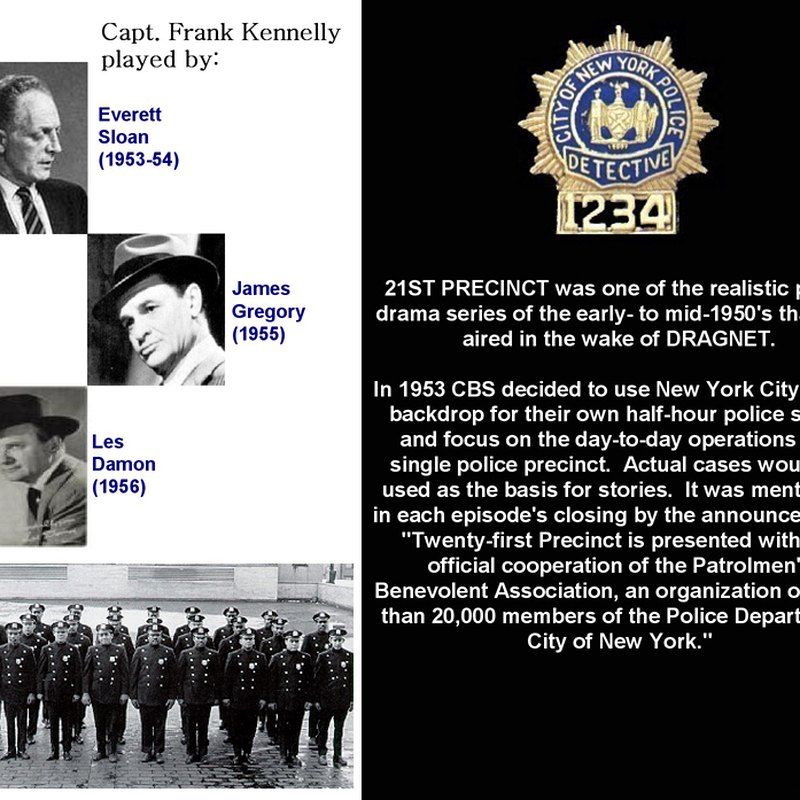
    21st Precinct

    A single New York precinct house, narrated by its captain, with the paperwork and the boredom left in. The most convincing station-house atmosphere in the genre.

    “The desk sergeant's view of the city.”

    00 ballots
  33. 1951–1952 · Network radio

    Whitehall 1212

    Cases drawn from Scotland Yard's own files with the Yard's cooperation, told in a flat English register that makes the horrors worse. A companion piece to The Black Museum.

    “Scotland Yard, telling it in its own voice.”

    00 ballots
  34. 1944–1945 · Network radio

    The Mysterious Doctor Weird

    Fifteen minutes, one twist, a host who invites you into his house near the graveyard. Compression is its whole virtue and it is remarkably good at it.

    “A complete nightmare in a quarter of an hour.”

    00 ballots
  35. 1949–1951 · Network radio

    Murder By Experts

    Working mystery novelists chose the story each week and introduced it, which makes the series a critical anthology as much as a dramatic one. John Dickson Carr and Brett Halliday both took turns.

    “The genre, curated by the people who wrote it.”

    00 ballots
  36. 1943–1948 · Network radio

    Molle Mystery Theatre

    Adaptations of first-rate crime fiction, from Woolrich to Sayers, played straight and cast well. An anthology that trusted its source material rather than its sound effects.

    “The reading list, dramatised.”

    00 ballots
  37. 1943–1954 · Network radio

    The Adventures of the Falcon

    A gentleman troubleshooter who solves cases with charm and a telephone, in the lightest possible register. Perfectly formed programme filler, and better company than most leads.

    “Detection as good manners.”

    00 ballots
  38. 1944–1950 · Network radio

    Boston Blackie

    The reformed thief as enemy to those who have no friends, forever one step ahead of a police inspector who suspects him first. Formula executed at speed and with real charm.

    “The crook the police can never quite arrest.”

    00 ballots
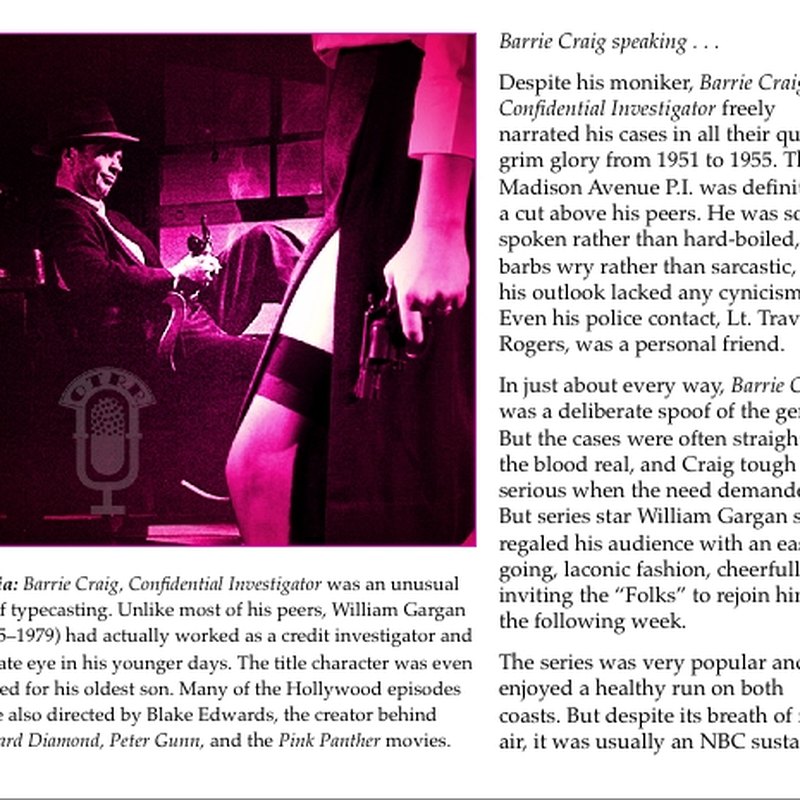
  39. 1951–1955 · Network radio

    Barrie Craig, Confidential Investigator

    William Gargan as a Manhattan investigator who is neither cynical nor sentimental, in tightly built half-hours. The genre's most underrated regular series.

    “The private eye who behaves like an adult.”

    00 ballots
  40. 1948–1950 · Network radio

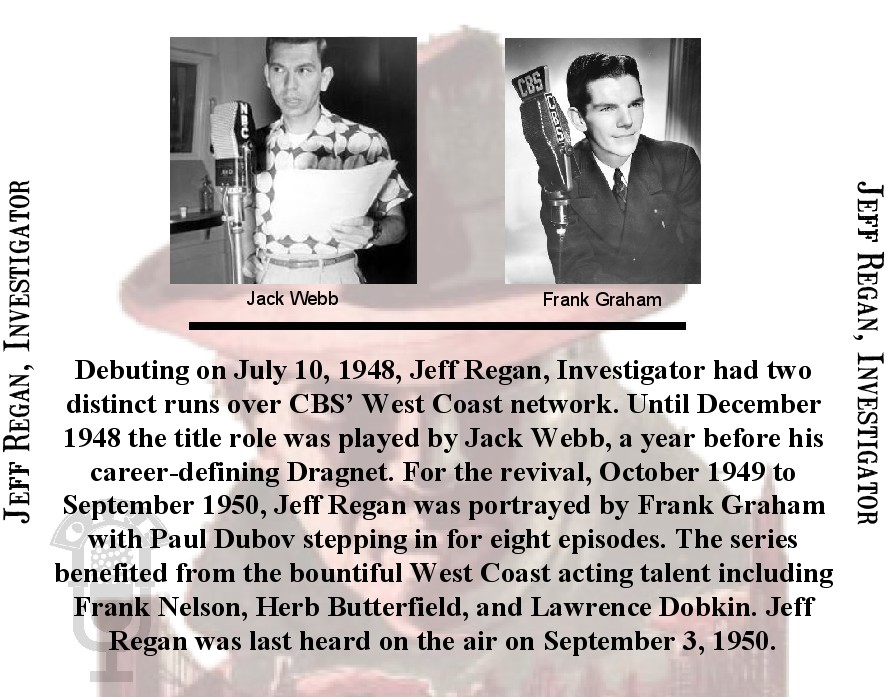
    Jeff Regan, Investigator

    Jack Webb, again, working for a boss he despises for ten dollars a day. The self-loathing is played for laughs and lands anyway.

    “The lion's mouth, and a man who knows it.”

    00 ballots
  41. 1946–1951 · Mutual

    The Casebook of Gregory Hood

    An importer of curios who investigates because the objects lead him there, created by the writers of the Rathbone Holmes. Genteel, well-plotted and unusually literate.

    “Detection for people who collect things.”

    The whole run
    00 ballots
    28 min transfer
  42. 1937–1955 · Network radio

    Mr. Keen, Tracer of Lost Persons

    One of the longest runs in the genre, an elderly investigator finding the missing, and the series Bob and Ray parodied so thoroughly it never recovered. Both versions are worth hearing.

    “The kindly detective, and the joke he became.”

    00 ballots
  43. 1945 · Network radio

    Sealed Book

    A keeper of the book, a great gong, and twenty-six syndicated half-hours of doom-laden supernatural crime. Ripe, and enormously enjoyable for it.

    “Horror with the volume knob painted on at maximum.”

    00 ballots
  44. 1943–1955 · Network radio

    Nick Carter, Master Detective

    The dime-novel detective, sixty years old by the time radio got him, opening every week with a crash of breaking glass. Pulp heritage played entirely without irony.

    “The oldest detective in America, still working.”

    00 ballots
  45. 1948–1950 · Network radio

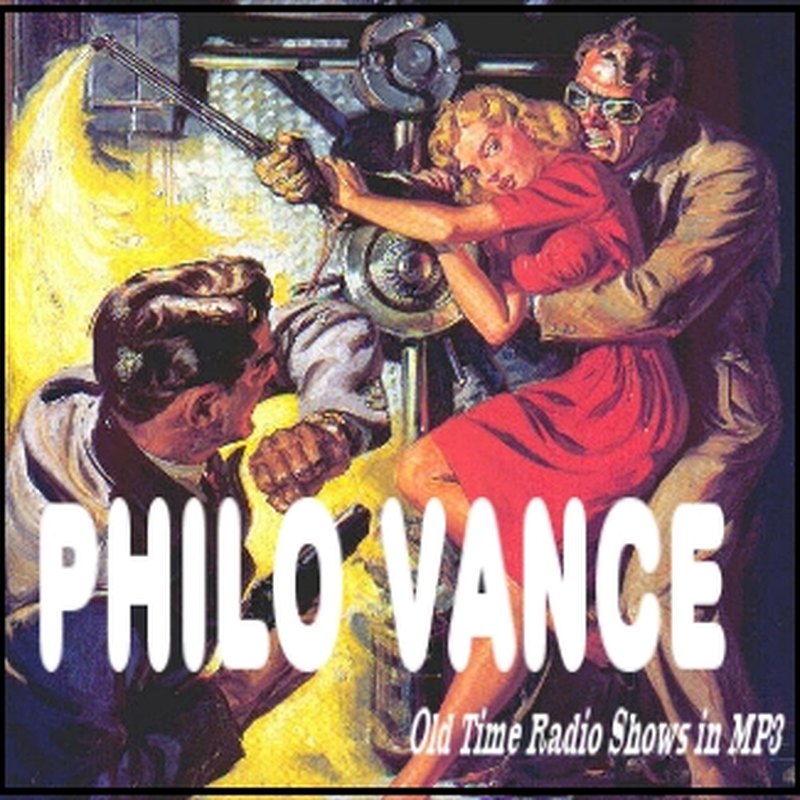
    Philo Vance

    S. S. Van Dine's insufferable aesthete detective, mercifully trimmed of most of his lecturing for radio. The plots remain the elaborate puzzles of the twenties.

    “The drawing-room puzzle, at half the length.”

    00 ballots
  46. 1954 · Network radio

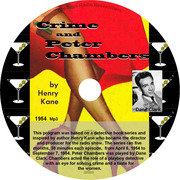
    Crime and Peter Chambers

    A late, brief series with a jazz score and a New York private eye written by Henry Kane from his own novels. Radio drama already dying, and still trying something.

    “A last good idea, arriving too late.”

    00 ballots
  47. 1930s–1940s · Network radio

    The Hermit's Cave

    A cackling host, a cave, an organ and a half-hour of cheap horror out of Detroit and later Los Angeles. Crude next to Suspense, and the surviving transfers are exactly the reason a generation slept with the lamp on.

    “The cheapest chill on the dial, and still effective.”

    00 ballots

The editors’ order is judgement, not arithmetic; the listeners’ order is your ballots, one per entry, and you can change or withdraw a vote at any time. Programme dates and networks are taken from the surviving broadcast record; the recordings attached are real transfers held in this archive, with their own titles and dates left exactly as they came.